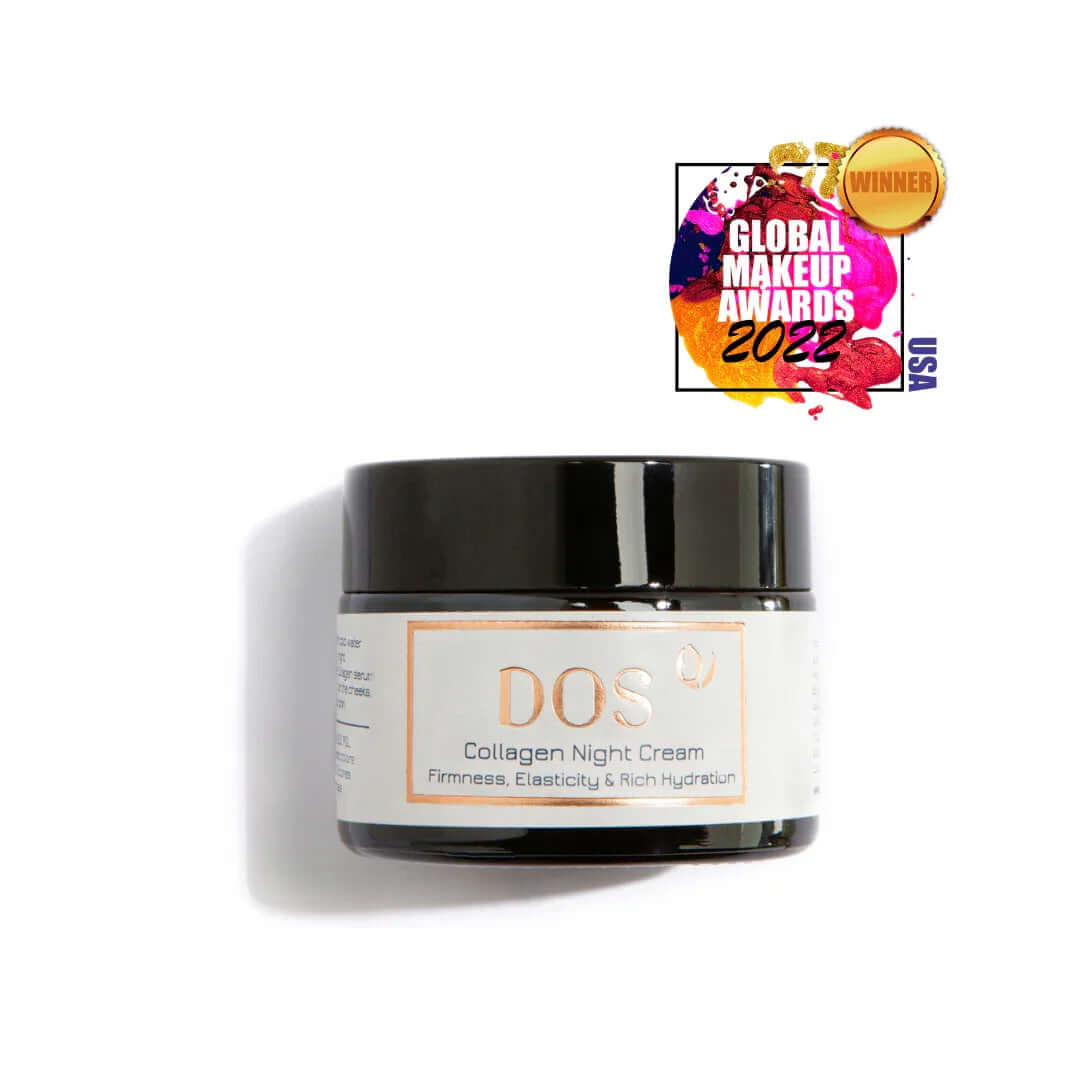

Collection: Night Creams

Night is when skin rebuilds. These creams are formulated to work with that window — not against it.

Filter
Sort by

10 products

Filter and sort Filter
Filter and sort
Filter

10 products

10 products

FAQs

What does a night cream do that a day cream doesn't?

A night cream supports your skin while it repairs itself; a day cream protects it while it's exposed. Overnight, skin temperature and permeability rise, and cell renewal is at its most active — which means richer textures and higher concentrations of active ingredients are both better absorbed and better used. Day creams are built to sit lighter and shield against sun, pollution and daily stress. That's why we treat them as two different jobs, not one product used twice.

Which DOS night cream is right for me?

That depends on your skin's tendency — dehydration, oxidation (which shows as pigmentation and dark spots) or oiliness — as well as your age, your sensitivity and the season you're in. We don't believe in one night cream for everyone, which is why the range is built around those needs rather than around a single hero formula. The fastest way to find yours is our skin test: five questions about how your skin actually behaves, followed by a personalised recommendation of no more than three products.

What's inside a DOS night cream?

Greek herbs from the Olympus region, combined with hydrating and repairing actives such as hyaluronic acid, marine collagen and peptides. Where most formulas are built around a single registered active, ours draw on the many active compounds naturally present in the herbs themselves — tannins, phenolics, saponins and more — which work in synergy the way nature arranged them. When we analysed the eleven herbs used in one of our award-winning night creams against a database of 180 known active ingredients, more than 90 were present. Every ingredient list is published in full on each product page.

How do I use a night cream properly?

Cleanse and tone first, then apply your night cream as the last step of your evening routine, on skin that's still slightly damp. Use a small amount — roughly a pea size for the whole face — and warm it between your fingertips before pressing it into the skin rather than rubbing it in. Extend down the neck. Applying it 20–30 minutes before bed gives it time to absorb before it meets your pillow. Three well-chosen steps are enough; we don't believe premium skincare should take seven.

How long before I see results?

Most people notice a visible difference within 7 to 10 days of consistent nightly use. That isn't luck or an average — it's the outcome we formulate towards, using our own advanced absorption technology, which helps the active ingredients reach the deeper layers of the skin instead of sitting on the surface. Texture and hydration usually shift first; pigmentation and firmness take longer and reward patience.

Should I change my night cream by season?

Yes — skin behaves differently in December than it does in July, and a routine that ignores that is working against it. In summer, most skins need less occlusion and do better with lighter textures. In winter, cold air and indoor heating pull moisture out and slow the barrier's recovery, so we focus on deeper hydration, gentle exfoliation and the more intensive night treatments. Winter is the real regeneration window. Seasonal adjustment is built into the skin test, so your recommendation shifts as the year does.

Can I use a night cream if my skin is sensitive or reactive?

Yes — sensitivity is a condition, not a skin type, and it's assessed separately when we recommend a product. Every formula is free from parabens, sulfates, PEGs and alcohol, made in our own lab in small batches, clinically tested for safety and never tested on animals. We use natural fragrances rather than no fragrance at all, so if you react to essential oils, check the full ingredient list on the product page before choosing. If your skin is genuinely reactive, the skin test will steer you toward the gentler formulas in the range.